Warning: The following post contains spoilers.
Death in horror movies isn’t just about the body count; it’s about the moments that stick with you. The ones that burn themselves into your memory. Sure, horror is packed with jump scares, splashes of blood, and over-the-top kills that make us laugh and cringe. Sometimes at the same time. We’ve all seen the fake-looking prosthetics and comically bad CGI. Those moments entertain us, but they don’t haunt us.
And then there are the ones that do. The deaths that hit like a gut punch. The ones that make you grip the arms of your chair because they feel so wrong. These are the moments that remind us that horror isn’t just about monsters and masked killers, it’s about mortality. It’s about what happens when control slips away.
Join me on this descent into the macabre, and prepare to squirm, cringe, and most importantly, feel.
Here are 10 horror movie deaths that still haunt us:
10. The Fly (1986) – Brundle’s Final Death
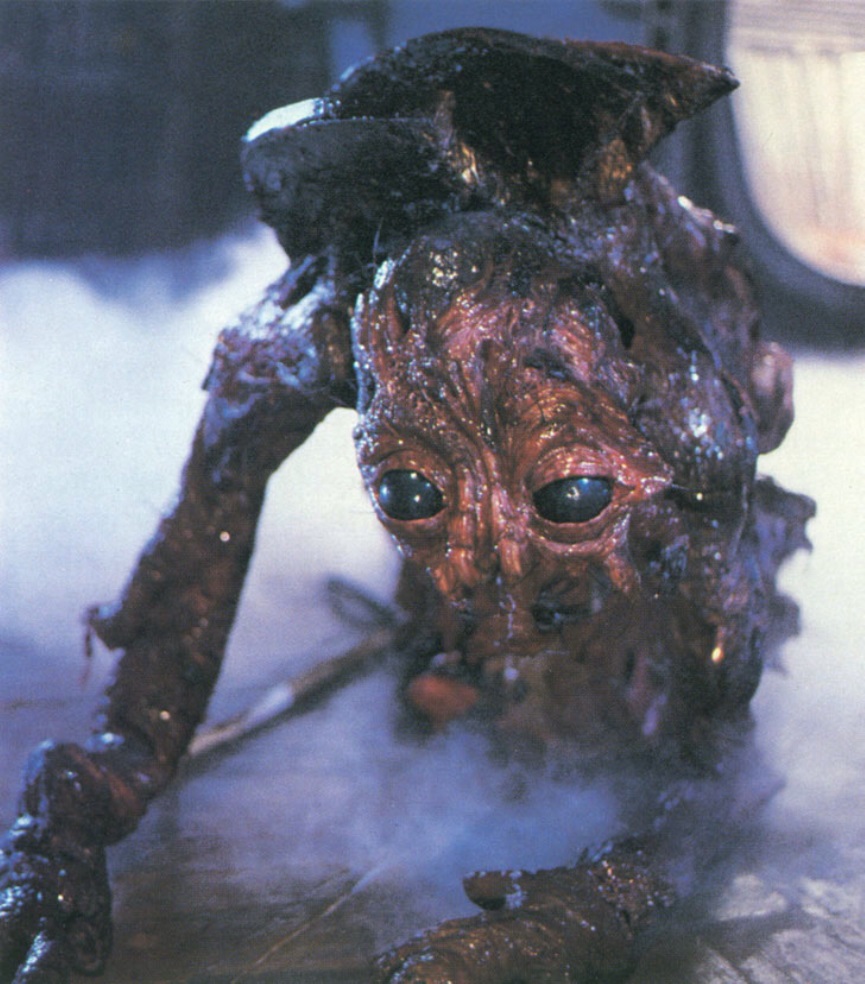
This one is a tragedy wrapped in goo. As Brundle begs for mercy, the horror isn’t just his grotesque body. The true terror is watching the man disappear inside the monster he created. By the time Seth Brundle reaches his end, he’s no longer the eccentric, brilliant scientist we met at the beginning of the film. He’s a wretched mutation of man and insect fused together. As his body mutates beyond recognition, his identity as a human being begins to dissolve.
His pleading eyes, what’s left of them, beg for release from the body horror hell in which he has trapped himself. Veronica raises the shotgun while trembling. Watching that scene, I could feel her conflict: killing him is both mercy and murder. The shot isn’t cathartic; it’s devastating. It is as emotional as it is grotesque in a love story eaten alive by science.
9. Day of the Dead (1985) – Captain Rhodes’ Dismemberment
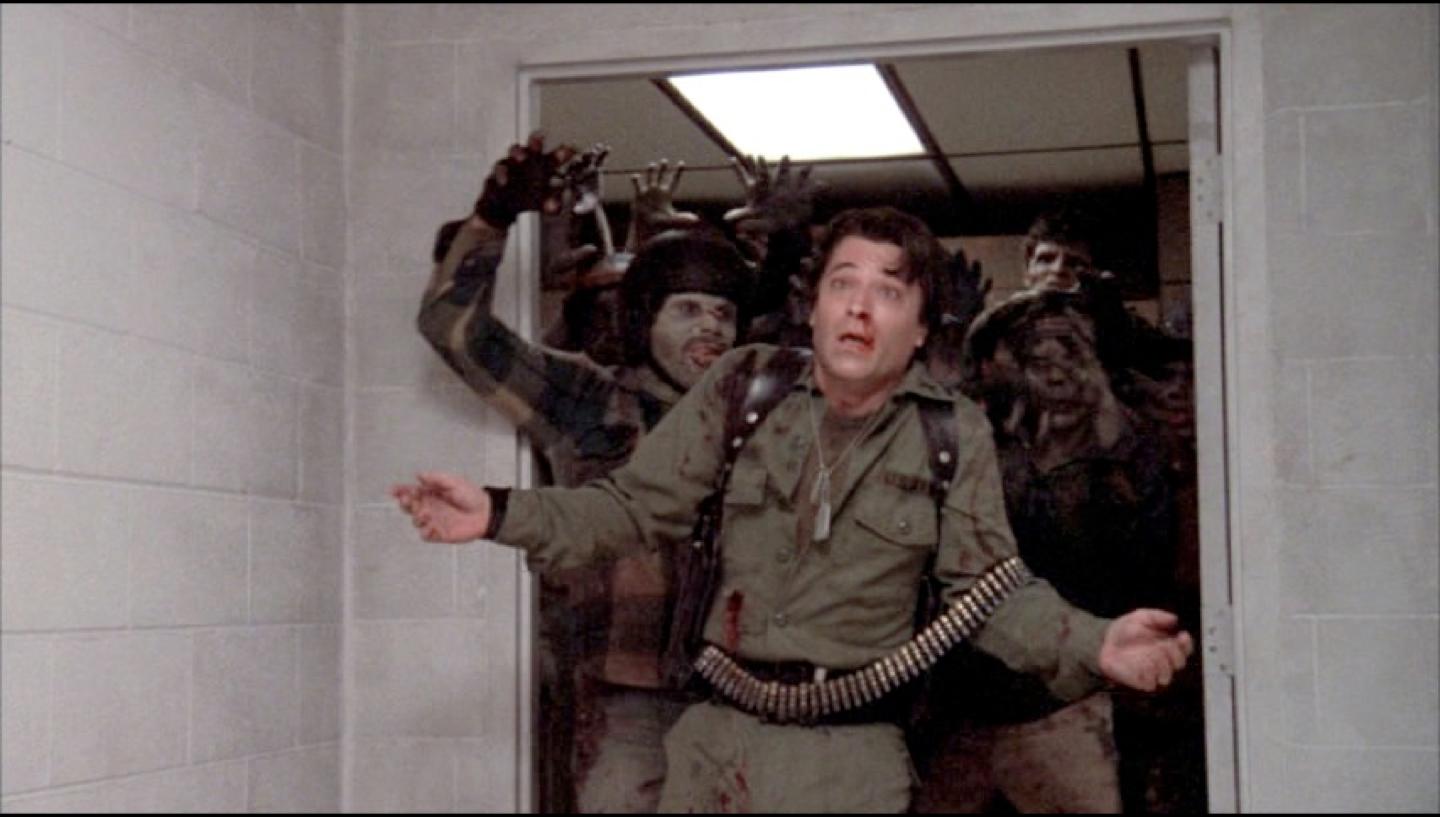
Captain Rhodes’ death is equal parts disgusting and defiant. Being torn apart while sneering “Choke on ’em!” turns gore into legend. Captain Rhodes doesn’t go quietly. When the undead finally get him, it isn’t just the end of a man; it’s the collapse of the entire brutal order he’s been clinging to throughout the film. Throughout Day of the Dead, Rhodes represents everything ugly about survival: arrogance, cruelty, and a delusional sense of control. He barks orders, bullies everyone around him, and treats his soldiers and scientists like expendable tools. So when the zombies finally drag him down, it feels like cosmic justice.
But it’s not the gore alone that makes this scene legendary. It’s his attitude. Even as he’s being torn in half, his intestines spilling from his body, Rhodes doesn’t beg for mercy. Instead, he snarls that immortal line: “Choke on ’em!” It’s a moment of pure defiance and the dying gasp of a tyrant who refuses to let death have the last word.
The scene truly is revolting, but there’s an elegance to its horror. It’s George A. Romero at his most symbolic: the oppressor devoured by the oppressed.
8. Jaws (1975) – Quint’s Death
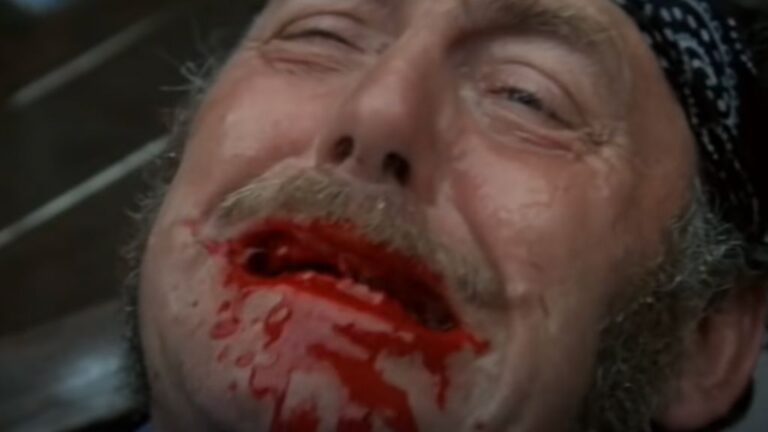
This has to be the ocean’s most famous kill. Quint’s brutal thrashing in the shark’s jaws captures our primal fear of being eaten alive. As a matter of fact, few deaths in cinema hit as deep a nerve as Quint’s. It’s not just that he’s eaten alive (which I’m sure we’d agree would be a terrifying experience). It’s how it happens. Spielberg draws it out with dreadful inevitability: the boat tilting, the deck slick with seawater and blood, and Quint sliding helplessly toward the gaping maw of the very shark he’s hunting. It’s the ultimate irony – the hunter consumed by his own obsession.
As the great white’s jaws clamp around him, there’s no stylized heroism or triumphant music. There is just raw, animalistic panic. Quint thrashes, kicks, screams, and pounds at the monster that’s dragging him down. It’s not clean or cinematic, it’s chaotic and desperately human. You can practically feel the splintering wood and the bone-snapping crunch. His screams, muffled by blood and ocean spray, make the sound design alone a masterpiece of horror.
But beneath the carnage lies something deeply poetic. Quint’s death isn’t random; it’s karmic. His bravado, his need to dominate the sea, and his inability to let go of past trauma converge in this single moment. He once survived a shark attack on the USS Indianapolis, and now the ocean claims him in the most brutal full-circle way imaginable.
7. Midsommar (2019) – The Cliff Ritual

The unbearable crunch of bodies hitting rock in broad daylight. That’s what Midsommer gives us in this unforgettable scene. This is folk horror at its most sun-soaked and sickening. The ättestupa sequence in Midsommar is the moment where discomfort turns to outright horror. Up until then, the film lulls you with sunlight, flowers, and the slow, narcotic calm of Swedish serenity. Then the elders climb the cliff, and the crowd gathers below, silent and reverent. The camera lingers on their serene faces.
And then the first elder leaps. The sound that follows, that crunch, is almost unbearable. There’s no score to cushion it or cutaway scene for reprieve. Ari Aster forces you to sit in that moment: the bones breaking, the stillness that follows, and the dawning horror on the outsiders’ faces as they realize this isn’t just a suicide. It’s a celebration.
When the second elder jumps and misses the mark, the horror sharpens into something almost ritualistically cruel. Villagers step forward with a mallet, calm and dutiful, to finish the rite. It’s an act so absurdly barbaric and yet so serenely performed that it feels more alien than any monster ever could.
What makes this scene so haunting isn’t just the gore. It’s a violation of safety. Horror isn’t supposed to happen in daylight, surrounded by flowers and smiling faces. Midsommar weaponizes beauty, turning warmth into menace. By the time the ritual ends, you realize the real terror isn’t the death itself, it’s how peacefully it is accepted.
6. Funny Games (2007) – The Remote Control Rewind
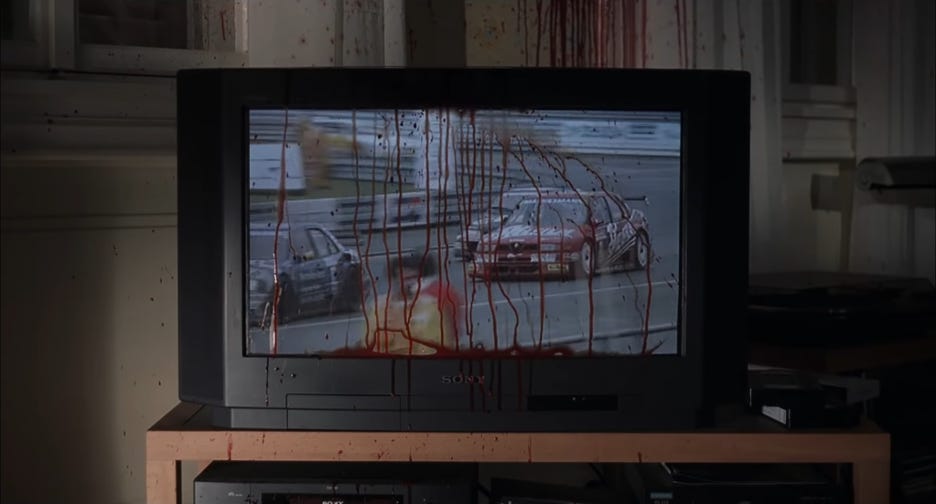
It isn’t just a death, it’s a cruel taunt. Haneke robs us of hope by rewinding the film, thereby trapping us in the characters’ helplessness. Throughout the story, we watch a family tormented by two eerily polite young men who play sadistic games with them. We begin to cling to the hope that someone will break free. That horror convention will finally allow the victims a moment of justice.
And then, for a brief, glorious second, it happens. The mother seizes a shotgun and blows one of the intruders away. The audience exhales, feeling a sense of vindication. But then, the unthinkable happens. The surviving killer picks up a remote control, points it at the screen, and rewinds the movie itself. The kill is undone, and we are yanked out of our illusion of hope.
It’s one of the most audacious and upsetting moments in film history. Haneke weaponizes our expectations. We’ve been trained by decades of horror to believe in catharsis. To expect a survivor’s victory. But here, the filmmaker deliberately denies it. By rewinding the film, he reminds us that we’ve been complicit all along, watching cruelty as entertainment and rooting for violence to feel better about it.
5. The Texas Chain Saw Massacre (1974) – Hammer to the Head
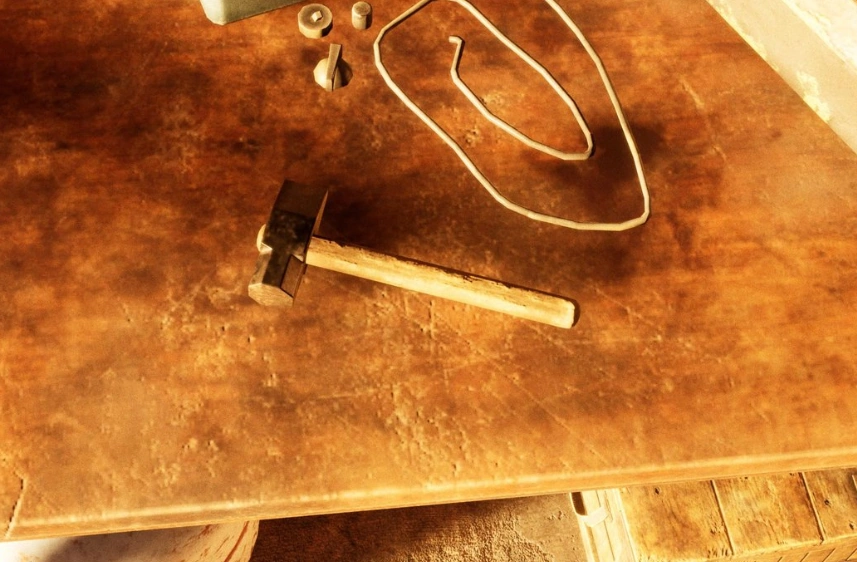
The blow was raw, sudden, and merciless. There was no warning. It was horror stripped bare in the shocking finality of savage violence. Few moments in horror are as brutally honest as the first kill in The Texas Chain Saw Massacre. There’s no eerie buildup, no swelling score, and no cinematic warning of any kind that tells you to brace yourself. Just a man wandering into a strange house, a pig squeal, a blur of motion, and then the hammer falls. The violence is fast and ugly, and we are left with the sickening thud of steel on bone and the twitching aftermath of the body.
In that moment, Tobe Hooper redefined horror. There’s no morality play or explanation; just sudden, hard-handed brutality. Leatherface doesn’t stalk or taunt; he kills like it’s his job because to him, it is. And then the door slams. That heavy, metallic clank has haunted generations of horror fans. It’s the punctuation mark at the end of a nightmare-infused sentence.
4. The Wicker Man (1973) – The Human Sacrifice
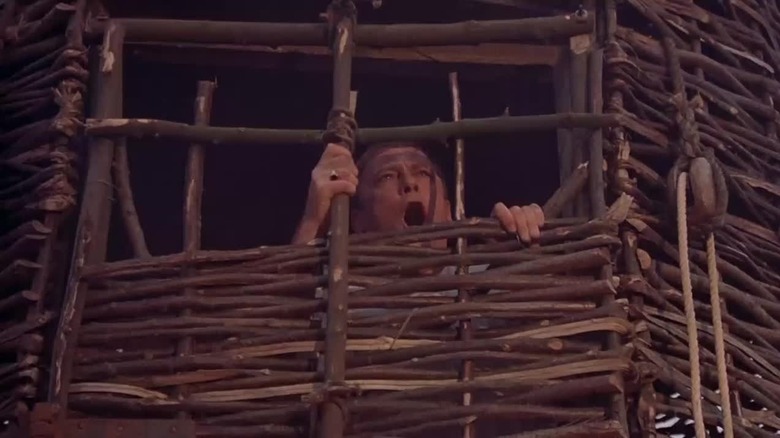
The chanting crowd, the fire, and the screams come together to bring us folk horror’s most infamous ending. It lingers because of its inevitability. The ending of The Wicker Man is one of horror’s most haunting scenes. From the moment Sergeant Howie arrives on Summerisle, we feel the creeping sense that he’s already doomed. He walks with conviction, armed with righteousness and law, through a world that hums with older, darker rhythms.
The procession is eerily beautiful. The villagers smile as they lead him through the meadows, with flowers in their hair, and a song on their lips. There’s no malice apparent on their faces. As they bind Howie and hoist him into the colossal wicker effigy, the mood is almost celebratory. Children sing, drums beat, and the sun glows warm.
Inside the towering structure, Howie screams prayers to a God who will not answer him. His hymns clash against the villagers’ cheerful pagan songs, creating one of cinema’s most disturbing soundscapes; salvation and damnation dueling under a cloudless sky. And as the flames climb and the wicker crackles, he’s swallowed by fire. It shows how easily cruelty can masquerade as conviction.
When the structure finally collapses and the sun dips below the horizon, the islanders cheer, and the audience sits in silence. There’s no villain to hate or victory to savor. We are left with the realization that Howie was never fighting a traditional villain. He was fighting belief itself. And belief always burns brightest just before the dark.
3. Hereditary (2018) – Charlie and the Telephone Pole
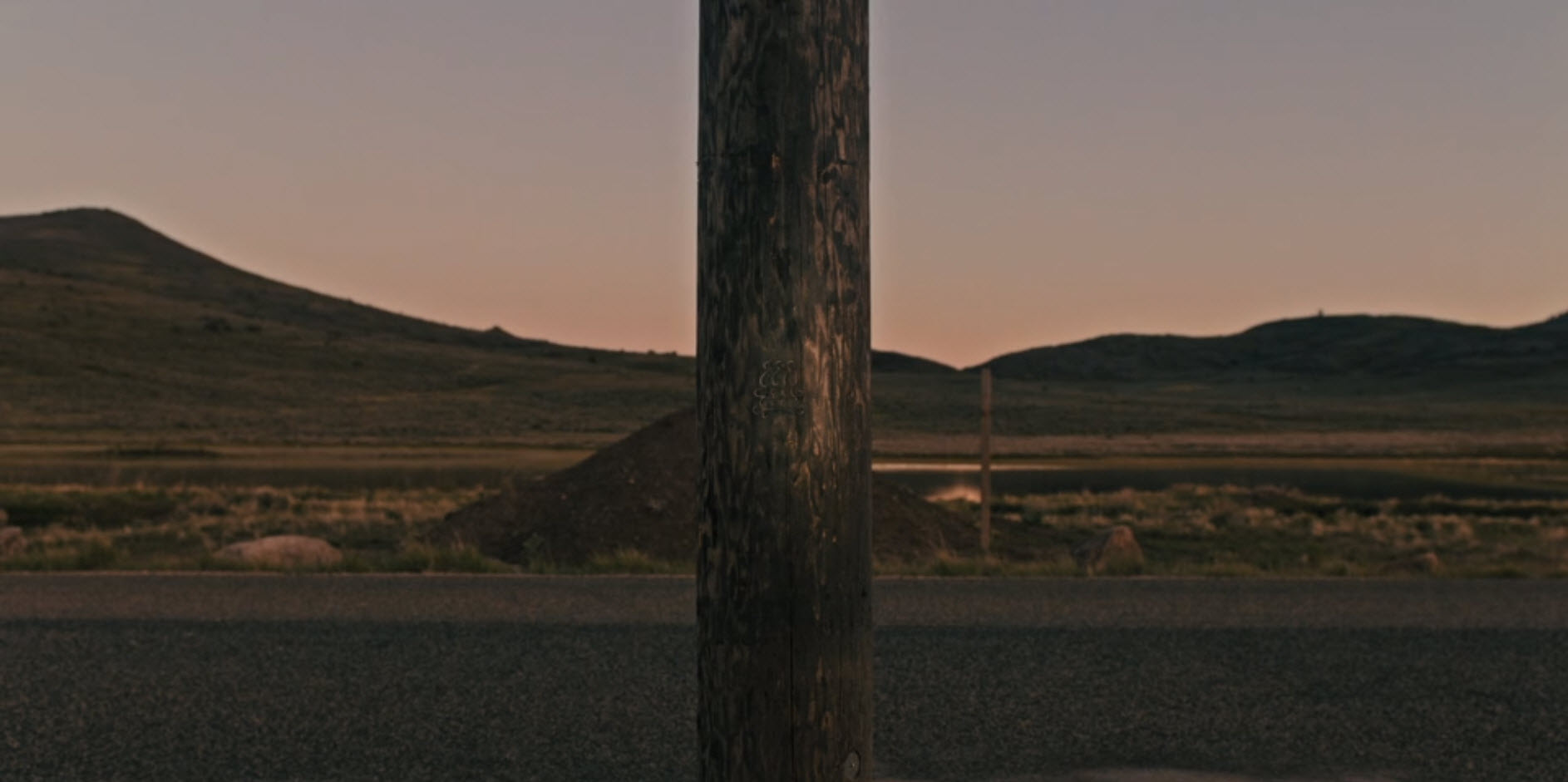
A sharp crack, silence, and a brother’s horrified breathing redefined modern horror by showing us that grief can be just as terrifying as any monster. Few moments in modern horror have the power to stop your heart like the telephone pole scene in Hereditary. It begins not as horror, but as pure anxiety: a teenager, Peter, driving home from a party with his younger sister, Charlie, gasping for air in the back seat after an allergic reaction. The scene unfolds with frantic realism; headlights, speed, panic, and then, in a single horrifying instant, it happens.
What follows is the longest, heaviest silence in horror history. Peter doesn’t scream or even move. The camera lingers on his face as realization takes hold. His breathing quivers, his eyes glaze, and he shuts down in the face of trauma. He drives home in stunned silence, climbs into bed, and stares into the dark.
We never see him tell anyone. Instead, the day awakens to the mother’s scream. The film doesn’t show us the body right away; it shows us the grief. It’s one of the few horror scenes that doesn’t need music or violence to disturb you; it simply presents unbearable emotional anguish.
This is the moment Hereditary becomes about the horror of loss, guilt, and a family riving. The accident is random and meaningless, yet it feels cosmically inevitable. In that single second, Ari Aster redefined what horror could be: not a creature in the dark, but the sound of a mother discovering her child’s body, the quiet of a brother who can’t forgive himself, and the suffocating grief that turns an ordinary family into a tragedy.
2. The Mist (2007) – The Ending Massacre
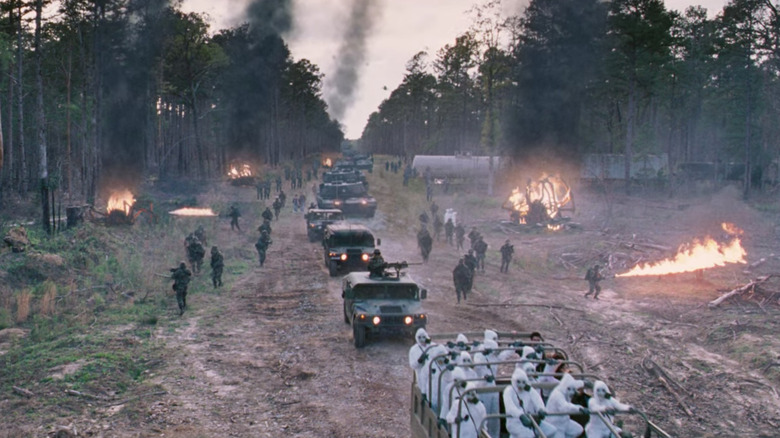
This is one of the bleakest, most soul-crushing endings in horror cinema. The Mist doesn’t end with a scream; it ends with the sound of a man’s soul collapsing. After surviving days of terror inside a supermarket surrounded by unspeakable creatures, David Drayton and a handful of others finally make a break for it. Their escape feels fragile and desperate, but it’s also the first glimmer of hope in the movie. They drive through the mist and past unearthly horrors and towering beasts. When the gas runs out, they sit in silence waiting for death to find them.
And that’s when the real horror begins. David looks around the car at those with him: his son, two elderly survivors, and a woman he’s fought alongside. He checks his gun, and there are four bullets left, but five people are in the car. The math alone is devastating. What follows is one of cinema’s most excruciating choices. He kills them quickly, mercifully, believing he’s sparing them from a far worse fate. Then, moments later, salvation arrives. The mist begins to clear. Military trucks roll through, flamethrowers blazing, and soldiers rescuing survivors. David collapses, screaming. It’s cosmic irony at its most merciless.
What makes this ending so haunting isn’t just the tragedy of bad timing; it’s what it says about human nature. The Mist isn’t about monsters from another dimension; it’s about the monsters we become when we lose hope. Faced with the unknown, David’s faith, logic, and morality crumble. The film dares to ask a question most horror avoids: what if the worst thing isn’t dying, but living long enough to realize what you’ve done?
1. Alien (1979) – Kane’s Chestburster
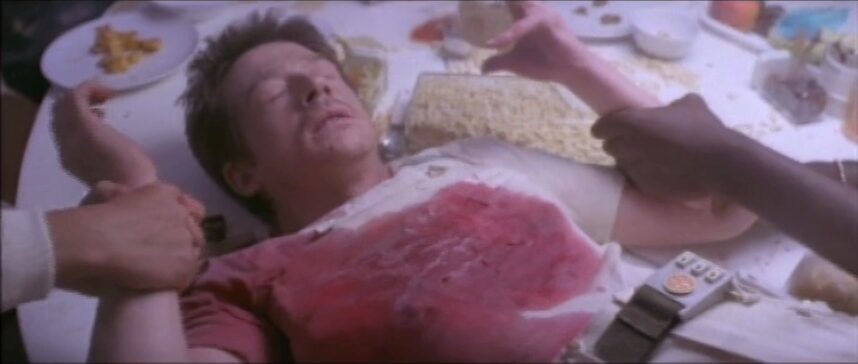
Still the king, few deaths shocked audiences as viscerally or rewrote the rules of horror like this one. It begins like a sigh of relief. The crew of the Nostromo is finally relaxing, laughing, eating, and feeling a sense of normality again after a close brush with death. Kane, played by John Hurt, seems fine. Whatever alien parasite was attached to his face is gone, and everyone assumes the nightmare is over. Then Kane starts coughing. At first, it seems like nothing. But it escalates. His body convulses, silverware clatters, and confusion turns to panic. And then the eruption. The Chestburster punches through his ribs in a spray of blood and sheer disbelief. It’s fast, chaotic, and grotesquely intimate.
The brilliance of the scene lies in its realism. Ridley Scott famously kept the full details from the cast, so the shock you see on their faces is genuine. They weren’t just acting terrified; they were absolutely horrified. The camera doesn’t glamorize the kill or cut away quickly. It lingers, forcing you to watch as the creature screams its first cry of life, slick with blood, before scurrying into the shadows.
What makes Kane’s death so haunting is that it’s not just a murder. It is a violation. Kane’s body became a host, womb, and unwilling participant in something monstrous. With that single shocking scene, Alien rewrote the DNA of horror cinema. It fused science fiction with body horror, replaced predictable slasher kills with organic, biological terror, and reminded audiences that space is the perfect setting for a new kind of nightmare. Kane’s death didn’t just birth a monster; it birthed an entire subgenre. Decades later, it’s still the measuring stick for shock, tension, and terror. Many films have imitated it, but none have captured the sheer wrongness of that moment.
Conclusion
Horror thrives on fear, but the deaths that linger most aren’t always the bloodiest. The best horror doesn’t just make us flinch; it makes us feel. It reminds us of how fragile we are, how easily order slips into chaos, and how even the strongest hearts can crack when confronted with the unthinkable.
From Chestbursters and hammer blows to ritual flames and impossible choices, each of these deaths tells us something about being human. They force us to look at pain, guilt, and loss without the filter of euphemism and without any sign of solace. Horror, at its best, is not just about dying; it’s about what dying reveals: our desperation to survive, our faith in meaning, and the terrifying realization that sometimes the universe doesn’t care.
That’s why these moments stick. They echo long after the credits roll and we turn off the lights. Because deep down, we recognize a piece of ourselves in every scream. So next time you watch a horror movie, don’t just brace yourself for the jump scares. Lean in and let it unsettle you. Let it challenge you. Ask yourself why it hurts to watch. Because in the end, the best horror doesn’t just scare us. It changes us.
Now it’s your turn. What horror movie death has stayed with you? Let me know in the comments below.